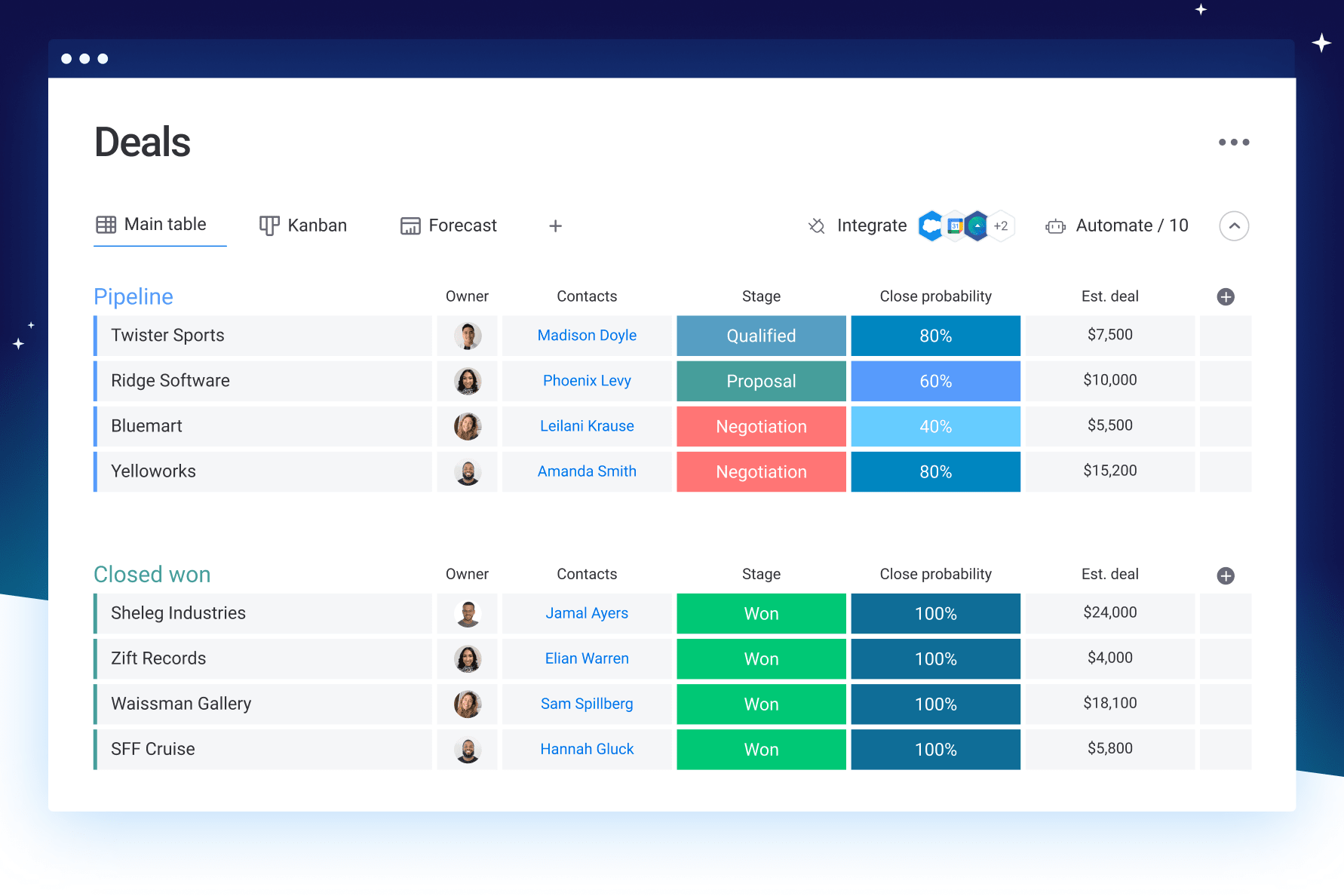
CRM Software: Streamlining Business Operations and Enhancing Customer Relationships
In today’s dynamic business landscape, organizations are constantly seeking innovative strategies to gain a competitive edge. One such strategy that has gained significant traction is the implementation of Customer Relationship Management (CRM) software. CRM software is a powerful tool that enables businesses to manage and analyze customer interactions and data throughout the customer lifecycle, with the goal of improving customer relationships, driving sales growth, and enhancing overall business performance.
Understanding CRM Software
At its core, CRM software is a technology solution that helps businesses organize, automate, and synchronize their sales, marketing, customer service, and technical support functions. It provides a centralized platform for managing customer data, interactions, and communications, allowing businesses to gain a comprehensive understanding of their customers’ needs, preferences, and behaviors.
Key Features and Functionalities of CRM Software
CRM software typically encompasses a wide range of features and functionalities, including:
- Contact Management: This feature allows businesses to store and manage detailed information about their customers, including contact details, demographics, purchase history, and communication preferences.
- Sales Force Automation: This feature automates various sales processes, such as lead management, opportunity tracking, sales forecasting, and quote generation, enabling sales teams to focus on closing deals and generating revenue.
- Marketing Automation: This feature automates marketing tasks, such as email marketing, social media marketing, and campaign management, allowing businesses to reach a wider audience and nurture leads more effectively.
- Customer Service Management: This feature enables businesses to provide efficient and personalized customer service through various channels, such as phone, email, chat, and social media, ensuring customer satisfaction and loyalty.
- Analytics and Reporting: This feature provides businesses with valuable insights into their customer data, sales performance, marketing campaign effectiveness, and customer service metrics, enabling them to make data-driven decisions and optimize their business strategies.
Benefits of Implementing CRM Software
Implementing CRM software can bring a multitude of benefits to businesses of all sizes and industries, including:
- Improved Customer Relationships: By providing a centralized platform for managing customer data and interactions, CRM software enables businesses to gain a deeper understanding of their customers’ needs and preferences, allowing them to provide personalized and relevant experiences that foster stronger customer relationships.
- Increased Sales Revenue: By automating sales processes, improving lead management, and enhancing sales team collaboration, CRM software helps businesses close more deals, increase sales revenue, and achieve their sales targets.
- Enhanced Marketing Effectiveness: By automating marketing tasks, improving campaign management, and providing insights into marketing campaign performance, CRM software helps businesses reach a wider audience, generate more leads, and improve their marketing ROI.
- Streamlined Business Operations: By automating various business processes, such as sales, marketing, and customer service, CRM software streamlines business operations, reduces manual tasks, and improves overall efficiency.
- Better Decision-Making: By providing businesses with valuable insights into their customer data, sales performance, marketing campaign effectiveness, and customer service metrics, CRM software enables them to make data-driven decisions and optimize their business strategies.
Types of CRM Software
CRM software can be broadly classified into three main types:
- On-Premise CRM: This type of CRM software is installed and hosted on the company’s own servers and infrastructure. It provides businesses with greater control over their data and security but requires significant upfront investment and ongoing maintenance.
- Cloud-Based CRM: This type of CRM software is hosted on the vendor’s servers and accessed through the internet. It offers greater flexibility, scalability, and affordability compared to on-premise CRM, making it a popular choice for small and medium-sized businesses.
- Hybrid CRM: This type of CRM software combines elements of both on-premise and cloud-based CRM. It allows businesses to store sensitive data on their own servers while leveraging the flexibility and scalability of the cloud for other CRM functionalities.
Choosing the Right CRM Software
Selecting the right CRM software for your business requires careful consideration of your specific needs, budget, and technical capabilities. Here are some key factors to consider when choosing CRM software:
- Business Requirements: Identify your specific business requirements and ensure that the CRM software you choose can meet those requirements.
- Scalability: Choose a CRM software that can scale with your business as it grows.
- Integration: Ensure that the CRM software can integrate with your existing business systems, such as accounting software, email marketing platforms, and e-commerce platforms.
- User-Friendliness: Choose a CRM software that is easy to use and intuitive for your employees.
- Cost: Consider the total cost of ownership, including software licenses, implementation costs, training costs, and ongoing maintenance costs.
Implementing CRM Software
Implementing CRM software can be a complex process, but it can be made easier by following these best practices:
- Define Clear Goals and Objectives: Clearly define your goals and objectives for implementing CRM software.
- Involve Stakeholders: Involve stakeholders from all departments in the CRM implementation process.
- Develop a Detailed Implementation Plan: Develop a detailed implementation plan that outlines the steps involved in implementing CRM software.
- Provide Adequate Training: Provide adequate training to your employees on how to use the CRM software.
- Monitor and Evaluate Performance: Monitor and evaluate the performance of the CRM software to ensure that it is meeting your goals and objectives.
Examples of CRM Software Vendors
There are numerous CRM software vendors in the market, each offering a unique set of features and functionalities. Some of the leading CRM software vendors include:
- Salesforce: Salesforce is a leading cloud-based CRM software provider that offers a wide range of CRM solutions for businesses of all sizes.
- Microsoft Dynamics 365: Microsoft Dynamics 365 is a comprehensive suite of business applications that includes CRM, ERP, and other business solutions.
- SAP CRM: SAP CRM is a robust CRM software solution that is designed for large enterprises.
- Oracle Siebel CRM: Oracle Siebel CRM is a comprehensive CRM software solution that is designed for large enterprises with complex business requirements.
- Zoho CRM: Zoho CRM is a cloud-based CRM software solution that is designed for small and medium-sized businesses.
Conclusion
CRM software is an essential tool for businesses that want to improve customer relationships, drive sales growth, and enhance overall business performance. By providing a centralized platform for managing customer data and interactions, CRM software enables businesses to gain a deeper understanding of their customers’ needs and preferences, allowing them to provide personalized and relevant experiences that foster stronger customer relationships. When choosing CRM software, it is important to carefully consider your specific needs, budget, and technical capabilities. By following the best practices for implementing CRM software, businesses can ensure that they get the most out of their CRM investment.