The Power of the Cloud: How Cloud CRM Is Transforming Business
In today’s fast-paced and interconnected business landscape, Customer Relationship Management (CRM) has evolved from a simple contact management tool into a critical strategic asset. Among the various CRM solutions available, Cloud CRM has emerged as the dominant force, revolutionizing how businesses interact with customers, streamline operations, and drive growth.
What is Cloud CRM?
Cloud CRM, also known as Software-as-a-Service (SaaS) CRM, is a CRM solution that is hosted on remote servers and accessed via the internet. Unlike traditional on-premise CRM systems that require businesses to invest in and maintain their own hardware and software, Cloud CRM is managed by a third-party provider. This means that businesses can access CRM functionalities from anywhere with an internet connection, without the need for complex IT infrastructure.
Key Benefits of Cloud CRM:
- Cost-Effectiveness: One of the most significant advantages of Cloud CRM is its cost-effectiveness. Businesses can avoid the upfront costs associated with purchasing hardware, software licenses, and hiring IT staff to manage the system. Instead, they pay a subscription fee, which typically covers software updates, maintenance, and support.
- Scalability and Flexibility: Cloud CRM solutions are highly scalable and flexible, allowing businesses to easily adjust their CRM resources as their needs change. Whether a business is experiencing rapid growth or seasonal fluctuations, Cloud CRM can be quickly scaled up or down to accommodate changing demands.
- Accessibility and Mobility: Cloud CRM enables employees to access customer data and CRM functionalities from anywhere, at any time, using any device with an internet connection. This is particularly beneficial for sales teams, field service technicians, and remote workers who need to stay connected and productive while on the go.
- Easy Implementation and Integration: Cloud CRM solutions are typically easier and faster to implement than on-premise systems. The provider handles the installation, configuration, and maintenance of the software, freeing up businesses to focus on their core operations. Cloud CRM also integrates seamlessly with other cloud-based applications, such as marketing automation, email marketing, and accounting software.
- Automatic Updates and Maintenance: Cloud CRM providers handle all software updates, security patches, and maintenance tasks, ensuring that businesses always have access to the latest features and functionalities. This eliminates the need for businesses to allocate IT resources to manage the CRM system, allowing them to focus on strategic initiatives.
- Improved Collaboration: Cloud CRM facilitates collaboration among teams by providing a central repository for customer data and communication. Sales, marketing, and customer service teams can easily access and share information, ensuring that everyone is on the same page and working towards the same goals.
- Enhanced Data Security: Cloud CRM providers invest heavily in security measures to protect customer data from unauthorized access, data breaches, and other security threats. These measures include encryption, firewalls, intrusion detection systems, and regular security audits.
Key Features of Cloud CRM:
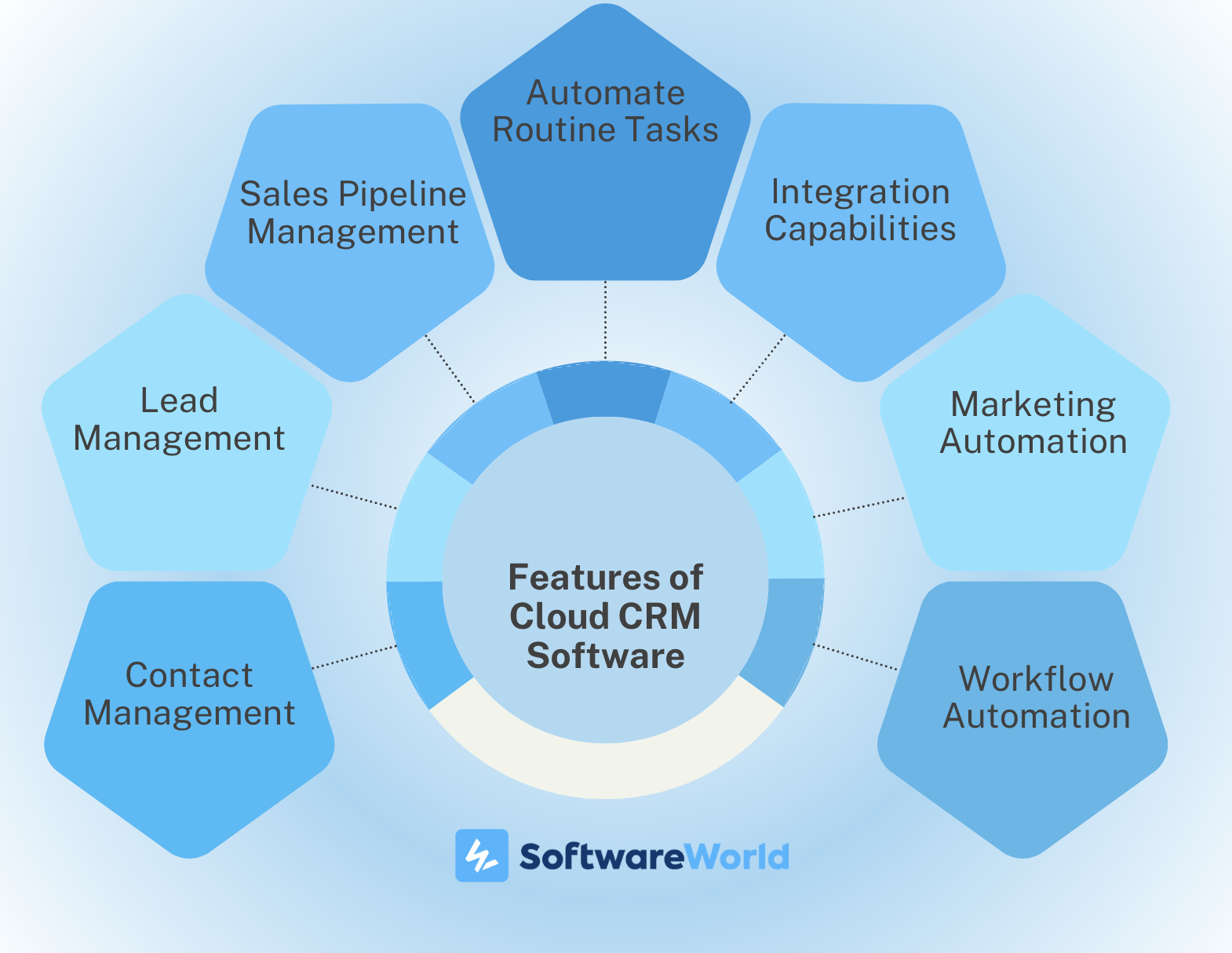
- Contact Management: Cloud CRM enables businesses to store and manage customer contact information, including names, addresses, phone numbers, email addresses, and social media profiles.
- Sales Force Automation: Cloud CRM automates sales processes, such as lead management, opportunity tracking, and sales forecasting.
- Marketing Automation: Cloud CRM automates marketing campaigns, such as email marketing, social media marketing, and lead nurturing.
- Customer Service Management: Cloud CRM enables businesses to provide excellent customer service by tracking customer interactions, resolving issues quickly, and providing personalized support.
- Analytics and Reporting: Cloud CRM provides businesses with valuable insights into customer behavior, sales performance, and marketing effectiveness.
- Mobile CRM: Cloud CRM solutions offer mobile apps that enable users to access CRM functionalities from their smartphones and tablets.
- Social CRM: Cloud CRM integrates with social media platforms, allowing businesses to track customer interactions and engage with customers on social channels.
Industries Benefiting from Cloud CRM:
Cloud CRM is suitable for businesses of all sizes and across various industries. Some of the industries that benefit most from Cloud CRM include:
- Sales and Retail: Cloud CRM helps businesses manage customer relationships, track sales leads, and provide personalized customer service.
- Healthcare: Cloud CRM enables healthcare providers to manage patient data, schedule appointments, and provide better patient care.
- Financial Services: Cloud CRM helps financial institutions manage customer relationships, track financial transactions, and comply with regulations.
- Manufacturing: Cloud CRM enables manufacturers to manage customer relationships, track sales orders, and provide better customer service.
- Technology: Cloud CRM helps technology companies manage customer relationships, track sales leads, and provide technical support.
- Real Estate: Cloud CRM enables real estate agents to manage customer relationships, track property listings, and close deals faster.
How to Choose the Right Cloud CRM Solution:
Choosing the right Cloud CRM solution can be a daunting task, as there are many options available. Here are some factors to consider when selecting a Cloud CRM solution:
- Business Needs: Identify your business needs and requirements before evaluating different CRM solutions.
- Features and Functionality: Ensure that the CRM solution offers the features and functionality that you need to achieve your business goals.
- Integration Capabilities: Check if the CRM solution integrates with other applications that you use, such as marketing automation, email marketing, and accounting software.
- Scalability: Choose a CRM solution that can scale with your business as it grows.
- Ease of Use: Select a CRM solution that is easy to use and requires minimal training.
- Security: Ensure that the CRM provider has robust security measures in place to protect your data.
- Pricing: Compare the pricing plans of different CRM solutions and choose one that fits your budget.
- Customer Support: Check the quality of customer support offered by the CRM provider.
- Reviews and Testimonials: Read reviews and testimonials from other users to get an idea of the CRM solution’s performance and reliability.
Future Trends in Cloud CRM:
The field of Cloud CRM is constantly evolving, with new technologies and trends emerging all the time. Some of the future trends in Cloud CRM include:
- Artificial Intelligence (AI): AI is being integrated into Cloud CRM to automate tasks, provide personalized recommendations, and improve customer service.
- Machine Learning (ML): ML is being used to analyze customer data and identify patterns that can be used to improve sales, marketing, and customer service.
- Internet of Things (IoT): IoT data is being integrated into Cloud CRM to provide businesses with real-time insights into customer behavior and preferences.
- Blockchain: Blockchain technology is being used to enhance the security and transparency of CRM data.
- Augmented Reality (AR): AR is being used to enhance customer experiences and provide personalized support.
Conclusion:
Cloud CRM has transformed the way businesses interact with customers, streamline operations, and drive growth. By leveraging the power of the cloud, businesses can access CRM functionalities from anywhere, at any time, without the need for complex IT infrastructure. Cloud CRM offers a wide range of benefits, including cost-effectiveness, scalability, accessibility, and improved collaboration. As the field of Cloud CRM continues to evolve, businesses that embrace this technology will be well-positioned to succeed in today’s competitive marketplace.
I hope this article meets your needs! Let me know if you’d like any revisions or adjustments.